Whatsapp
  X
X  Mail
Mail  Copy link
 In the pursuit of higher yields and sustainable agriculture, micronutrients often play an outsized role despite their minimal presence in the soil. One such essential micronutrient is molybdenum (Mo) which is critical for the optimal growth and productivity of agricultural crops. Plants take up Mo as the MoO₄⁻² anion.
Why molybdenum matters
Molybdenum is a key component of several plant enzymes, most notably nitrate reductase and nitrogenase, which are vital for nitrogen metabolism. These enzymes enable plants to convert nitrate into usable forms of nitrogen and, in legumes, facilitate biological nitrogen fixation through symbiotic relationships with Rhizobium bacteria.
Without sufficient molybdenum, plants struggle to utilize nitrogen efficiently, leading to symptoms such as stunted growth, leaf chlorosis, and poor yield quality. This is particularly critical in crops like soybeans, alfalfa, canola, and cauliflower, which have higher molybdenum demands. Legumes are particularly molybdenum-hungry crops, as they need more molybdenum to fix nitrogen to their root nodules.
Soil and crop management
Molybdenum availability is highly pH-dependent. Molybdenum becomes more available as soil pH increases, the opposite of most other micronutrients. Acidic soils (pH < 5.5) often limit molybdenum uptake due to maximal adsorption of Mo anions in the soil by Fe and Al oxides. This makes soil pH management and targeted molybdenum fertilization essential strategies. Applying molybdenum-enriched fertilizers or foliar sprays can correct deficiencies and enhance crop performance, especially in sensitive growth stages.
Deficiency symptoms of molybdenum
Molybdenum deficiency is relatively rare but can be highly detrimental, especially in acidic soils. Molybdenum is a mobile nutrient, so it translocated to the growing parts, leaving the older leaves with deficiency symptoms.
Common symptoms include:
- Interveinal chlorosis (yellowing between leaf veins), especially in older leaves
- Stunted growth and reduced leaf size
- Marginal leaf scorching or cupping
- Poor pod or flower development in legumes
- Whiptail disorder in cauliflower (distorted, narrow leaves)
- Reduced nitrogen fixation in legumes due to impaired nodule function
These symptoms often resemble nitrogen deficiency, making accurate diagnosis essential.
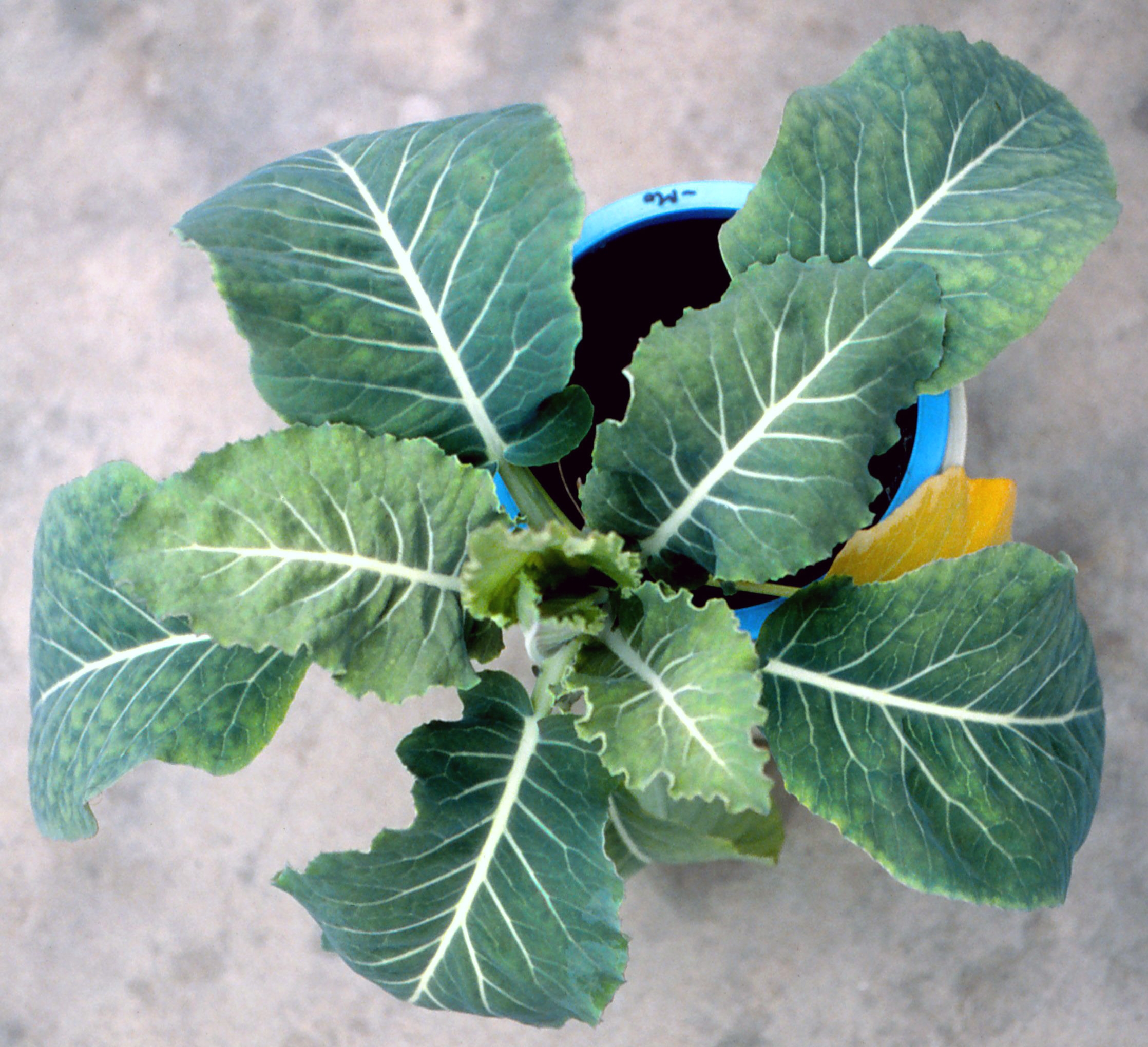
Molybdenum deficiency in cauliflower crop. Photo contributed by Takeshi Shimizu, Encyclopedia Nutrient Disorder Diagnosis (ISBN 13: 978-4540171666; ISBN 10: 4540171666)
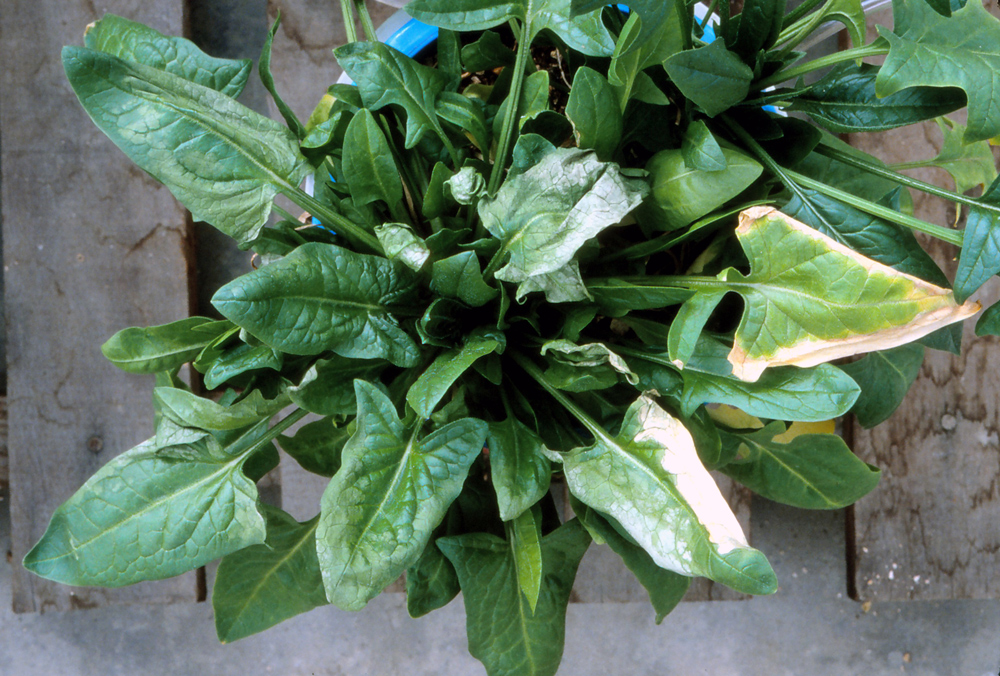
Molybdenum deficiency in spinach crop. Photo contributed by Takeshi Shimizu, Encyclopedia Nutrient Disorder Diagnosis (ISBN 13: 978-4540171666; ISBN 10: 4540171666)
Sources of molybdenum for crops
To prevent or correct deficiencies, molybdenum is supplied as inorganic forms (molybdates). They can be incorporated in NPK fertilizers fortified with Mo, in seed treatments for legumes to enhance early nodulation and can be combined with lime in acidic soils to improve availability.
ICL’s commitment to balanced nutrition
At ICL Growing Solutions, we understand that balanced plant nutrition is the foundation of resilient and productive agriculture. Our innovative fertilizer solutions are designed to deliver essential micronutrients like molybdenum in forms that are readily available and effective across diverse soil conditions.
Plants need molybdenum to help process the nitrogen they need for their nutrition. Agroleaf® Liquid MolyComplex delivers it to them. Agroleaf® Liquid MolyComplex is developed for use in both foliar and root applications, a nutritional supplement for plants requiring molybdenum in large amounts, preventing and correcting any deficiencies.
Other ICL fertilizers with molybdenum are: Agrolution Liquid ME-5 and M-6, and Agroleaf® Liquid MolyB.
The new line of ICL biostimulants, BIOZ® and BEOZ®, include molybdenum in their composition: Nephrite, Topaz, Sunstone, Onyx Annual, Onyx Permanent and Moonstone contain molybdenum, which is the core nutrient formulated in these products.
By integrating molybdenum into your crop nutrition program, you not only support robust plant development but also maximize the efficiency of nitrogen fertilizers—boosting both yield and sustainability.
Digital Tools
Calculators to improve nutrient management and boost productivity
3 Brands found
The liquid fertilizer providing pinpoint precision in foliar feeding
Agroleaf Liquid is our new liquid fertilizer range for foliar application across arable, all vegetables, and all fruits.
View Brand
Elevate your crops with ICL BEOZ®
ICL BEOZ® is our new range of biostimulants for Europe, specially engineered to boost your crops. The BEOZ collection of pioneering, novel biostimulants is designed to ensure crops reach their full potential by improving establishment; promoting growth; increasing flowering and fruit setting; enhancing tolerance to, and recovery from, stress and much more. Incorporating the Power of Synergistic Formulations Within the BEOZ biostimulant portfolio, we have products that utilize the power of Ascophyllum nodosum seaweed combined with amino acids to promote crop vitality and resilience by enhancing crop growth, increasing crop production, and combating abiotic stress. Within the BEOZ biostimulant portfolio, we utilize the power of many consolidated biostimulants and innovative and exclusive molecules. Ascophyllum nodosum seaweed, amino acids, polyols, fulvic and humic acids, microbial metabolites, and microorganisms are some of the top materials we use to promote crop vitality and resilience by enhancing crop growth, combating abiotic stress and ultimately increasing crop production. Boosting Stress Resistance Combatting environmental stress is important. Whether it be heat, drought, or salinity, our biostimulants activate plant metabolic pathways to give crops the tools they need to resist the effects of stress and to help them quickly recover from stress conditions. This ensures sustained growth and productivity in challenging conditions. Resolving Nutrient Use Efficiency Poor nutrient use efficiency can impact crop growth, yield and profitability. Within the BEOZ portfolio are biostimulants that keep crop growth on track by improving plants’ ability to take up and utilize the nutrients that are present in the soil. This is fundamental to recover investments made in fertilizer and move towards a more sustainable crop management. Increasing Nutrient Flow within Crops One of the other key functions our BEOZ biostimulants can bestow upon crops is to increase the flow of sap and nutrients between growing organs. By improving this movement in a balanced and efficient way, crops can get the nutrients where they are needed, to and from roots, leaves, and ultimately to fruit and grains to optimize crop growth and yield. The Power of BEOZ Biostimulants from ICL By unleashing the true potential of crops, BEOZ biostimulants improve nutrient uptake, enhance crop performance under stress conditions, and give your crops the boost they need to improve vitality and resilience. Explore our BEOZ biostimulants to discover their power to enhance crops, whether that be fruit, trees, nuts, vegetables, or cereals. By improving nutrient uptake and transport, improving crop resistance to stresses, stimulating root and vegetative growth, and improving flowering and fruit production, you are sure to reap the rewards of ICL BEOZ biostimulants.
View Brand
Unlock the potential of your crops with Bioz®
Excerpts are optional hand-crafted summaries of your content that can be used in your theme. Learn more about manual excerpts. Excerpts are optional hand-crafted summaries of your content that can be used in your theme. Learn more about manual excerpts.
View Brand10 Products found