Whatsapp
  X
X  Mail
Mail  Copy link
 Our portfolio
Sustainable and innovative solutions to increase your crop yield
Explore our products


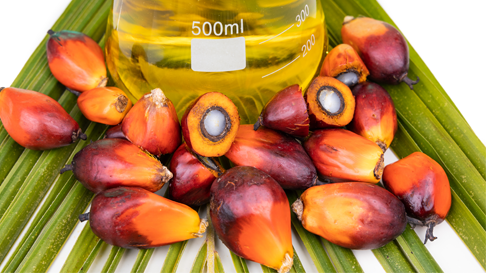
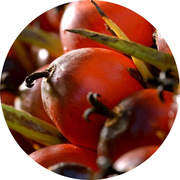
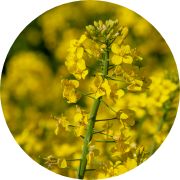
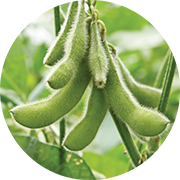
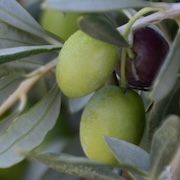
Oils are typically extracted from the seeds of crops like soybeans, rapeseed, sunflower, olives, or from the fruit pulp, as in the case of oil palm. Proteins, on the other hand, are concentrated in the seeds of leguminous crops such as soybeans, peas, fava beans, lentils, and chickpeas, which are grown for both human consumption and animal nutrition. Together, these crops play a vital role in global food systems, sustainable agriculture, and industrial applications.
While often used interchangeably, “oil crops” and “oilseed crops” refer to distinct categories within agriculture. Oil crops encompass all plants cultivated primarily for oil extraction, including both seed-based sources like sunflower, rapeseed, and soybean, and fruit-based sources such as oil palm and olives. In contrast, oilseed crops specifically denote crops whose seeds are processed to yield vegetable oils. This narrower group excludes fruit-derived oils and focuses on seed-bearing plants with high lipid content.
Oil and protein crops offer more than just nutritional and economic value – they play a strategic role in building resilient, productive agricultural systems. Leguminous protein crops naturally enrich the soil through biological nitrogen fixation, reducing the need for nitrogen fertilizers and supporting healthier crop rotations. Legumes can fix between 30 and 300 kg of nitrogen per hectare annually, significantly improving soil fertility and reducing N fertilizer dependency.
The diversity within this crop group is a key agronomic asset. It spans cool-season legumes, warm-season oilseeds, and regionally adapted varieties that allow farmers to tailor rotations to local climate, soil, and market conditions. This diversity enhances system resilience by spreading agronomic risk, improving pest and disease management, and enabling flexible planting schedules. Oil crops like rapeseed and sunflower contribute to soil structure and organic matter when managed as part of integrated farming systems. Studies(1) show that rapeseed residues boost microbial biomass and soil carbon levels, supporting long-term soil health.
Many of these crops are well-adapted to marginal soils and variable climates, making them valuable tools for land optimization and climate-smart agriculture.
Protein crops play a crucial role in meeting the nutritional needs of both humans and animals. Leguminous crops such as soybeans, lentils, chickpeas, peas, and fava beans are rich in essential amino acids and serve as a key source of plant-based protein in many diets around the world. For humans, they offer a sustainable and affordable alternative to animal protein, supporting dietary diversity and helping combat malnutrition.
Fertilization strategies for these crops must reflect their unique nutrient dynamics. Legumes require minimal nitrogen input but to maximize biological nitrogen fixation (BNF) they should be inoculated with compatible Rhizobia bacteria strains and supported with adequate phosphorus, potassium and micronutrients like molybdenum which are critical for root development and nodulation. Oil crops, on the other hand, demand more targeted nitrogen applications – often split across growth stages – to support biomass and seed formation. Sulfur is also essential, especially for protein synthesis and oil quality.
ICL’s Polysulphate, delivering sulfur, potassium, magnesium and calcium in a single crystal, has proven to be an efficient fertilizer, significantly increasing yield in oil and protein crops. This fertilizer is especially suitable for legumes where the necessity for nitrogen inputs is reduced. Polysulphate’s benefits have been demonstrated in many field trials supported by ICL.
Before or while sowing, it is recommended to add phosphorus-rich fertilizers, like HiPeaK (for acidic soils), Nova PeaK, Agrolution pHlow (for calcareous soils). For foliar applications, it is recommended to add high potassium fertilizers, such as Nutrivant and HiPeaK. In irrigated systems, water-soluble fertilizers from the Nova range offer
the advantage of tailor-made fertigation recipes for specific growth stages and crops.
Overall, tailoring nutrient strategies to crop type, soil conditions, and rotation design is key to optimizing productivity and environmental performance.
Oil and protein crops are valued not only for their nutritional outputs – vegetable oils and plant-based proteins – but also for their agronomic versatility. From nitrogen-fixing legumes to high-yielding oilseeds, these crops support soil health, diversify rotations, and adapt to a wide range of climates and farming systems. Their dual role in food production and sustainable land management makes them indispensable in building resilient, efficient, and future-ready agricultural landscapes.
Sources
(1) Qiu J.R., Cui M.M., Gao D.N., Yao J.Y., and Qi Z.R., 2024, The role of rapeseed straw in soil fertility and crop productivity, Molecular Soil Biology, 15(5): 236-246. https://doi.org/10.5376/msb.2024.15.0024
Mitra B., and Mandal B., 2012, Effect of nutrient management and straw mulching on crop yield, uptake and soil fertility in rapeseed (Brassica campestris)-greengram (Vigna radiata)-rice (Oryza sativa) cropping system under Gangetic plains of India, Archives of Agronomy and Soil Science, 58: 213-222. https://doi.org/10.1080/03650340.2010.512611
Zhang R., Huang Z., Ashen R., Zhou N., Zhou L., Feng T., Zhang K., Liao X., Aer L., and Ma P., 2023, Phosphorus application during rapeseed season combined with straw return improves crop productivity and soil bacterial diversity in rape-rice rotation, Agronomy, 13(2): 506. https://doi.org/10.3390/agronomy13020506