Whatsapp
  X
X  Mail
Mail  Copy link
 Our portfolio
Sustainable and innovative solutions to increase your crop yield
Explore our products


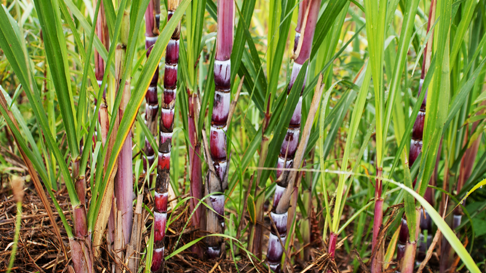
Sugar crops are crops grown for their sugar content. These include sugar beet (Beta vulgaris var. altissima), sugarcane (Saccharum officinarum), and sweet sorghum (Sorghum bicolor var. saccharatum), each playing a vital role in global food, feed, and bioenergy systems. Their cultivation supports rural economies, contributes to renewable energy production, and demands advanced agronomic management due to their intensive nutrient requirements and long growing cycles.
Sugar crops are not a botanical category but are grouped based on their economic use and physiological traits. Despite their differences, all sugar crops share a high demand for nutrients, particularly during periods of rapid vegetative growth and sugar accumulation. Their productivity is closely linked to root development, canopy expansion, and efficient photosynthesis – all of which are influenced by nutrient availability and timing.
Sugar crops are cultivated under a range of production systems, from large-scale mechanized plantations to smallholder-managed fields. Sugar beet is typically grown in open-field systems with intensive mechanization and seasonal rotations. It thrives in deep, well-drained soils with a neutral to slightly alkaline pH and requires cool conditions during early growth, followed by warmer temperatures for root bulking.
Sugarcane is cultivated in tropical and subtropical regions, often under irrigated conditions, and increasingly integrated with precision agriculture tools.
Sweet sorghum is gaining attention in semi-arid regions due to its resilience and suitability for biofuel production.
Each system presents unique challenges in nutrient management, including variability in soil fertility, water availability, and crop cycle length. These factors must be considered when designing fertilization programs to ensure both agronomic efficiency and environmental sustainability.
Nutrient management is critical, as sugar crops exhibit high and sustained nutrient demands throughout their growth cycle. Nitrogen (N) is essential for early vegetative growth and canopy development, while potassium (K) plays a critical role in sugar translocation, water regulation, and stress tolerance. Phosphorus (P) supports root development and energy transfer, particularly in early stages. Micronutrients such as zinc (Zn), boron (B), and manganese (Mn) are vital for enzymatic activity, sugar metabolism, and disease resistance.
On average, 1 ton of sugar beet crop, yielding ca 50 t roots per hectare, removes approximately 4 kg of nitrogen (N), 1.1 kg of phosphorus (P₂O₅), and 5.1 kg of potassium (K₂O) from the soil.
Sweet sorghum requires efficient nutrient delivery under water-limited conditions and needs well-fertilized soils. For a yield of around 11-15 tons/ha, the nutrient removal for 1 t is approximately 14 kg of nitrogen (N), 1.2 kg of phosphorus (P₂O₅), and 10 kg of potassium (K₂O). The demands are similar to those of corn.
In sugarcane, the nutrient removal varies by plant part. Stalks, which are harvested, account for the majority of nutrient export from the field. With a yield around 100 -120 t/ha, 1 ton of sugarcane removes approximately 1.6 kg of nitrogen (N), 0.3 kg of phosphorus (P₂O₅), and 1.8 kg of potassium (K₂O).
Fertilization strategies must be tailored to crop type, soil conditions, and production goals. In sugar beet, split nitrogen applications and balanced N:K ratios are key to optimizing root yield and sugar content. Sugarcane benefits from basal fertilization combined with in-season top dressing or fertigation, especially in ratoon crops.
Controlled-release fertilizers, like ICL’s Agromaster and Agroblen, chelated micronutrients and biostimulants are used to improve nutrient use efficiency (NUE) and boost plants‘ resilience under abiotic stress. Foliar applications of Nutrivant Plus Sugar Beet are efficient as well as, in general, base fertilizers of granular NPK, WSF with high potassium+boron (sugar crops need high boron).
Sugar crops—primarily sugarcane and sugar beet—are economically significant on a global scale due to their multifaceted roles in food, fuel, and industry. They contribute to food security, renewable energy, and rural employment. Sugar is produced in over 108 countries, with sugarcane accounting for 86% of global sugar output and sugar beet making up the rest. Major producers include Brazil, India, Thailand, and the European Union. Sugarcane cultivation and processing support the livelihoods of 100 million people worldwide.
The cultivation of sugar crops, however, must be managed carefully to minimize nutrient losses, soil degradation, and water use inefficiencies. Especially sugarcane is highly water-intensive, and therefore it is especially necessary to provide well-balanced fertilization with dosages based on nutrient removal. Excessive nitrogen applications may easily contribute to water pollution through leaching.
Sugar beet farming, while less water-demanding, also relies heavily on nitrogen fertilizers. It is always crucial to manage nitrogen fertilization carefully and most efficiently. Both crops can negatively impact soil health and biodiversity if not cultivated in a sustainable way. Adopting better agricultural practices and sustainable growing strategies can significantly reduce these environmental impacts.
Sugar crops play a pivotal role in global agriculture due to their versatility and high carbohydrate yield per hectare. They are essential not only for producing sweeteners in food and beverages but also serve as valuable feedstocks for livestock and renewable bioenergy. In countries like Brazil and India, sugarcane is a cornerstone of ethanol production, helping reduce reliance on fossil fuels. Additionally, by-products such as bagasse and molasses are increasingly used for bioelectricity and bioplastics, supporting circular economies and sustainability goals. As demand for clean energy and sustainable materials grows, sugar crops are poised to remain central to food security, energy transition, and climate resilience.
Sugar crops demand a comprehensive approach to nutrition—one that integrates crop physiology, soil science, and advanced fertilization technologies. Understanding their unique agronomic traits and nutritional needs is essential for maximizing yield, sugar content, and long-term sustainability. As global demand for sugar and bioenergy continues to grow, efficient and responsible nutrient management will remain a cornerstone of successful sugar crop production.