Whatsapp
  X
X  Mail
Mail  Copy link
 Growing Lettuce crop nutrition advice
Everything you need to know about lettuce fertilization, best practice, field trials, and more.
Lettuce Nutrition & Agronomic Guide
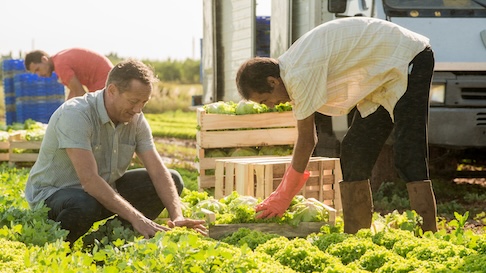
Fresh from the Field: Inspecting and Packing Lettuce at Harvest Time
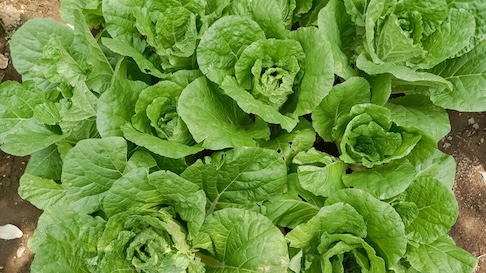
Lush Green Rosettes: Lettuce Thriving in the Field
Introduction
Global Significance & Major Producing Countries
Lettuce (Lactuca sativa L.) is a globally important cool-season leafy vegetable, cultivated in open fields and controlled environments such as greenhouses and hydroponics. Depending on the variety and season, lettuce has a a short growing cycle of 40–90 days, it allows multiple harvests per year in suitable climates.
According to FAO (2023), global area of lettuce and chicory account for 1.06 million hectares where production exceeds 27 million tons annually. China leads as the top producer with roughly 15 million tons, followed by the USA (~4.4 million tons), India, Spain, and Italy. The lettuce yields strongly depend on the region, variety, season and cultivation method. In Europe high intensive cultivation methods yields 8-25 t/ha in GH (Baby Leaf and Lambs lettuce in soil or leafy lettuce in hydroponics) and 15-40 t/ha in open fields (medium for crisp lettuce 30-40 t/ha and high for iceberg lettuce and chichory 40-65t/ha).
Types of Lettuce Explained
Lettuce is grouped into several types:
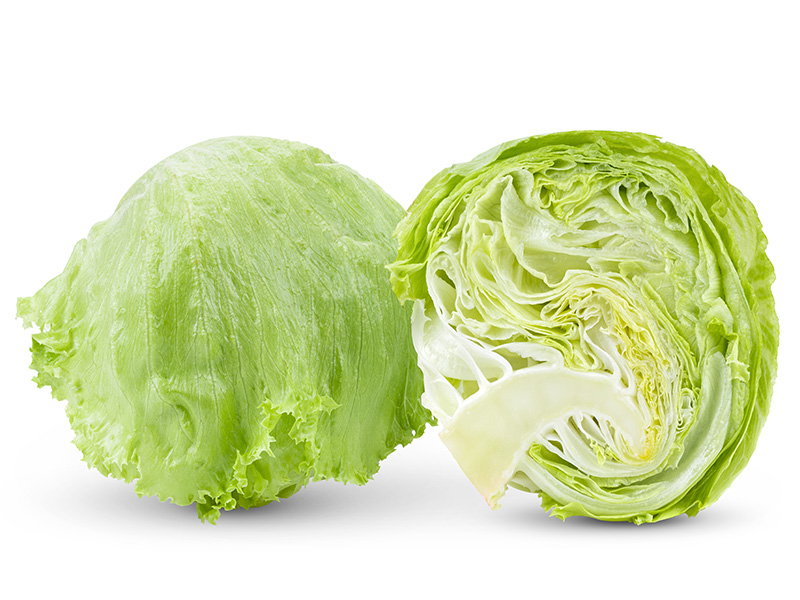
- crisphead (iceberg) – with its dense and crunchy heads;
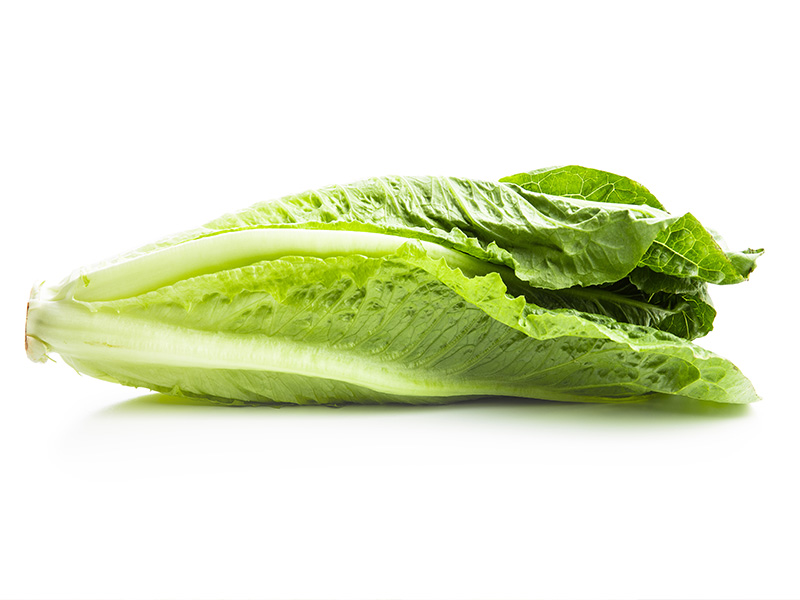
- romaine (cos) – known for its upright form and strong ribs;
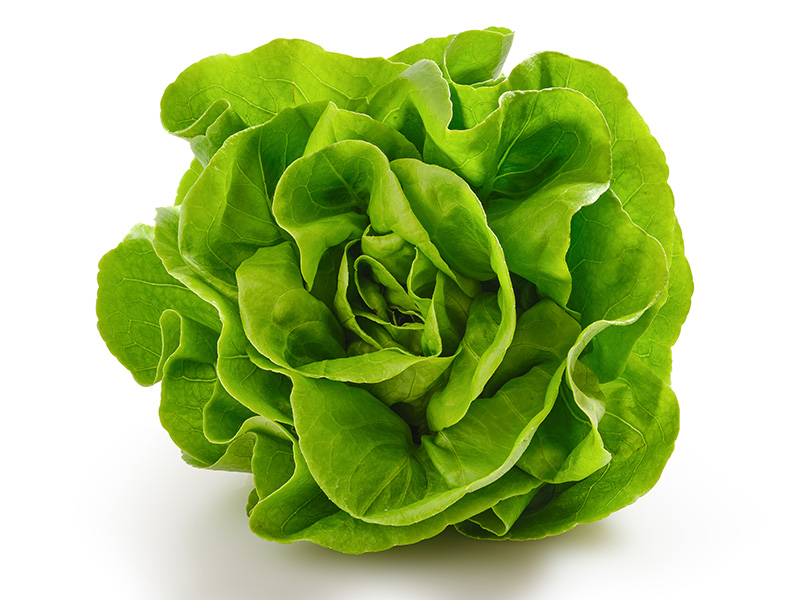
- butterhead – with soft, tender leaves;
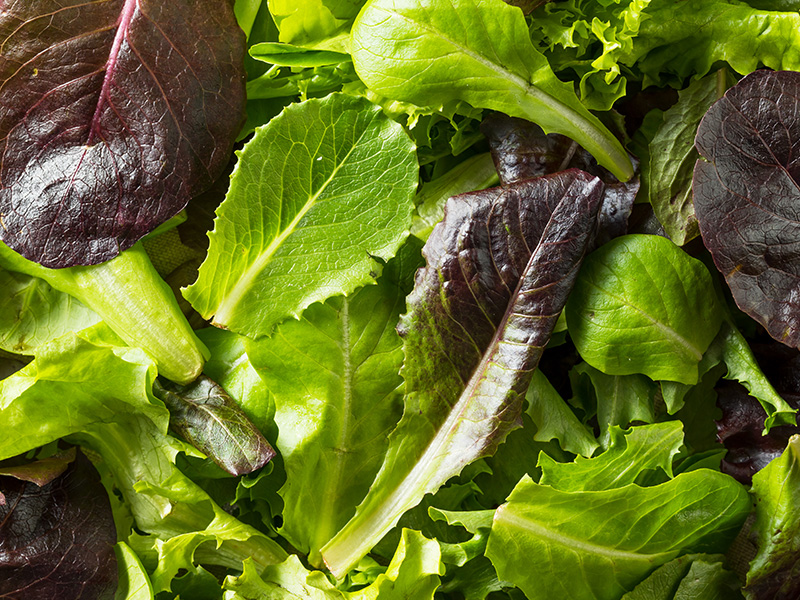
- loose leaf – favored in organic and baby leaf production;
- stem lettuce – commonly grown in parts of Asia for its edible stalk.
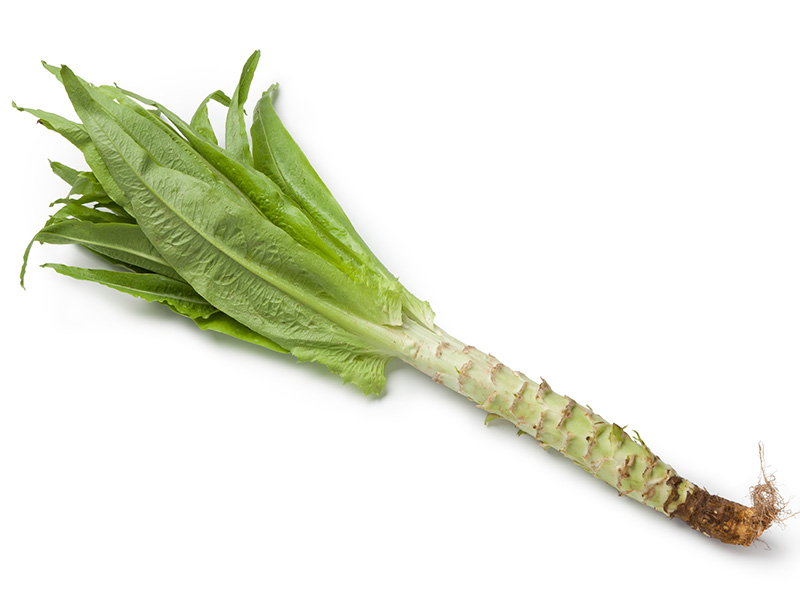
Each type has unique market preferences and cultivation requirements.
Nutritional Value, Production Challenges and Market Requirements
Nutritionally, lettuce is valued for being low in calories while offering good amounts of:
- vitamin A (as β-carotene)
- vitamin K
- folate
- antioxidants
- dietary fiber.
It consists of over 95% water, making it ideal for hydration and low-energy diets.
Abiotic challenges in lettuce production include calcium-related tip burn, bolting triggered by heat or long daylength and high sensitivity to soil salinity. Common pests include aphids and thrips, while diseases such as downy mildew and lettuce mosaic virus can threaten crop quality and yield. When repeatedly produced in the field, the infestation with Botrytis, Sclerotinia or Rhizoctonia becomes more likely. Nutrient leaching often occurs in light (sandy) soils.
Market preferences vary by segment but generally prioritize head firmness, crisp texture, deep green color, low nitrate residue (especially in European markets), and extended shelf life. High-value markets also require organic certification or adherence to maximum residue limits.
Plant Growth Environment
Soil Conditions
Lettuce grows best in well-drained loam to sandy loam soils, rich in organic matter and with a slightly acidic to neutral pH (6.0–6.8). Its shallow root system typically extends only 20 to 30 cm into the soil, making surface soil conditions critical for successful crop establishment and nutrient uptake. The crop is sensitive to salt stress, with growth suppression observed at EC levels above 2 dS/m. Sodicity (ESP >10%) further compounds nutrient availability problems, especially for calcium and magnesium. Heavy metals like cadmium and lead may become a concern when wastewater is reused for irrigation and must be monitored carefully under FAO/WHO guidelines.
Temperature and Light Requirements
Lettuce is a cool-season crop, thriving in temperatures between 15°C and 20°C. Above 25°C, plants are prone to bolting and physiological disorders such as tip burn. Optimal production requires a balanced daylength of around 12 to 14 hours; longer photoperiods may induce premature flowering in sensitive cultivars. In spring the crop should be produced in warm and wind protected areas while in autumn areas open to wind are preferable to prevent fungal infections.
Water and EC Management
Water management is critical for lettuce due to its shallow root system and high-water content. Evapotranspiration rates can reach 3 to 6 mm/day depending on climate. Frequent, light irrigations are preferred over infrequent deep watering. Lettuce is extremely sensitive to waterlogging and over-irrigation, which can lead to root rot and leaching of nutrients.
Water quality is equally important. Ideally, irrigation water should have an EC below 1.5 dS/m, with sodium and chloride levels kept below 5 meq/L, and bicarbonate levels below 2 meq/L. In areas with recycled or saline water, treatment or dilution may be necessary to avoid physiological and nutritional disorders.
Additional Root Zone Guidelines
| Parameter | Target Range | Notes |
|---|---|---|
| EC (1:2 soil:water) | 1.0–2.0 dS/m | Yield drops above 2.0; tip burn risk |
| pH (soil) | 6.0–6.8 | Al/Mn toxicity 7.5 |
| NO₃⁻ in root zone | 80–150 ppm | Maintain steady levels |
| K⁺ | 150–250 ppm | Monitor in fertigation |
| Ca²⁺ | 1000–2000 ppm | Prevent tip burn |
| B (hot water extractable) | 0.5–1.0 ppm | Deficiency 1.5 ppm |
Overall, ideal environmental management for lettuce integrates good soil structure, precise irrigation scheduling, and salinity control, especially during critical growth stages like leaf expansion and head formation.
Nutrient Roles & Symptoms
Macronutrient Functions, Deficiency and Toxicity Symptoms
| Nutrient | Role | Deficiency Symptoms | Toxicity Symptoms |
|---|---|---|---|
| Nitrogen (N) | Leaf expansion, chlorophyll | Pale older leaves | Excess nitrate, weak tissue |
| Phosphorus (P) | Root growth, energy | Purpling, stunting | Zn deficiency risk |
| Potassium (K) | Turgor, texture | Leaf edge burn | Mg/Ca uptake suppression |
| Calcium (Ca) | Cell wall integrity | Tip burn, leaf collapse | Rare |
| Magnesium (Mg) | Chlorophyll, enzymes | Interveinal chlorosis | Induces K deficiency |
| Sulphur (S) | Protein synthesis | Yellowing young leaves | Rare |
Micronutrient Functions, Deficiency and Toxicity Symptoms
| Nutrient | Role | Deficiency | Toxicity |
|---|---|---|---|
| Fe | Chlorophyll synthesis | Interveinal chlorosis (young leaves) | Bronzing |
| Mn | Enzyme activation | Speckling, mottling | Necrosis |
| Zn | Auxin synthesis | Small, curled leaves | Chlorosis |
| Cu | Cell wall lignification | Pale tips, deformation | Rare |
| B | Cell wall & flowering | Poor heading, hollow stem | Tip burn, leaf scorch |
Balanced nutrient availability is essential to optimize lettuce quality and yield. Antagonistic interactions include high potassium reducing magnesium or calcium uptake, or excessive phosphorus inhibiting calcium, zinc and iron availability. Best practice involves maintaining optimal nutrient ratios based on soil and tissue tests (e.g., K:Ca:Mg at ~3:2:1 in solution). Regular monitoring and fertigation adjustments help prevent induced deficiencies even when total nutrient levels are adequate.
| Nutrient Pair | Recommended Ratio | Notes |
|---|---|---|
| N : P : K | 1 : 0.3 : 2.0 | Vegetative phase; balance for leaf development |
| K : Ca : Mg | 3 : 2 : 1 | Prevents Mg and Ca suppression by K |
| NO₃⁻ : NH₄⁺ | 4 : 1 | Avoids NH₄⁺ toxicity and tip burn |
| Ca : B | 1000–1500 : 1 | Maintains cell wall integrity; avoid tip burn |
| Fe : Mn : Zn : Cu | 2 : 1 : 1 : 0.5 | Apply as chelates for availability |
| S : Mg | 1 : 1 to 2 : 1 | Adjust by water sulfate levels |
These ratios are general targets. For precise application, conduct soil and tissue tests and adjust based on local agronomic conditions.
Growth Stages & Nutritional Needs
Growth Phases of Lettuce and Their Nutrient Demand
| Stage | BBCH | Days | Focus |
|---|---|---|---|
| Establishment | 01-09 | 0–15 | Rooting, P demand |
| Leaf Expansion | 10-19 | 15–35 | N, Mg, K uptake |
| Heading | 41-48 | 35–50 | Ca, B, K essential |
| Maturation | 49 | 50–75 | Nutrient finishing |
Nutrient Demand by Growth Stage
| Stage | N | P | K | Ca | Mg | S |
|---|---|---|---|---|---|---|
| Early | ++ | ++ | + | + | + | + |
| Mid | +++ | + | ++ | ++ | + | + |
| Late | ++ | – | +++ | +++ | + | + |
Application Methodologies
| Method | Use |
|---|---|
| Soil | P, base Ca, K before transplant |
| Foliar | B, Fe, Zn correction mid to late crop |
| Fertigation | N, K in 6–10 splits post-rooting |
Climate Change Impacts on Crop Nutrition
| Impact Factor | Nutritional Consequence |
|---|---|
| ↑ CO₂ | Diluted protein, micronutrients |
| ↑ Temperature | Ca immobility → tip burn, bolting |
| Erratic Rainfall | N & B leaching |
| Salinity Increase | Na⁺ competition with K⁺, Ca²⁺ |
Adaptation strategies include gypsum application for sodicity, adjusting planting dates, shade nets, and precision irrigation with EC/pH monitoring.
Climate change not only affects mature growth but also impacts seedling establishment and early root development. Elevated temperatures can reduce radicle elongation and disrupt hormonal signals for root branching. In sodic or saline soils, seedlings face osmotic stress, reduced turgor, and impaired nutrient uptake. These effects are particularly severe when evapotranspiration exceeds supply, or during transplant shock. Ameliorative strategies include the use of organic matter, root-zone wetting agents, biostimulants (e.g., seaweed extracts), and starter solutions with calcium and phosphorus.
Post-Harvest Nutrient Impact And Storage Requirements
Excess N can lead to poor shelf life and high nitrate levels. Adequate Ca and B enhance firmness and transportability. Immediate cooling to 0–2°C after harvest is mandatory for maintaining shelf-life and quality by reducing respiration.
Beyond field nutrition, postharvest handling has a strong influence on lettuce quality. Immediately after harvest, the crop should be cooled to 0°C and maintained at 95–98% relative humidity. Modified atmosphere packaging (MAP), with reduced O₂ (1–3%) and elevated CO₂ (2-5%), helps reduce respiration, preserve color, and extend shelf life.
Lettuce is highly sensitive to ethylene gas, even at levels below 1 ppm. Thus, separation from climacteric fruits like apples, bananas, and tomatoes is essential. Minimizing mechanical injury during harvest and packing is also vital, as bruising accelerates decay and nutrient degradation.
References
- (2023). Lettuce & Chicory Statistics.
- UC Davis Vegetable Research & Info Center.
- Penn State Extension. Lettuce Nutrient Management.
- Cornell University. Soil Fertility for Vegetables.
- Marschner, P. (2012). Mineral Nutrition of Higher Plants.
- Hochmuth & Hanlon (2017). Nutrient Management of Veg Crops.
- USDA NRCS. Soil and Water Management Technical Notes.
- WHO/FAO. Guidelines for Wastewater in Agriculture (2011).
Related Trials
Q&A
Split N and K; early P; foliar B/Ca; adjust by soil/tissue test.
<5.5 → Al/Mn toxicity; >7.5 → Fe, Zn, P lockout
Ca deficiency + high humidity or evapotranspiration
Drip or sprinkler with EC monitoring
Avoid late high N; ensure light and B; harvest on sunny days
Recommended Products
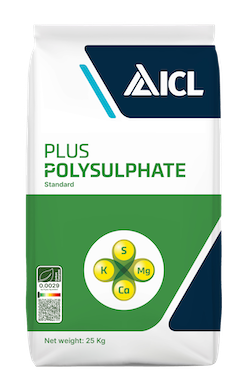
Polysulphate®
Nutrient & Unit Converter
Access calculators to improve nutrient management and boost productivity