Whatsapp
  X
X  Mail
Mail  Copy link
 Maximizing Crop Yield with Smart Phosphorus Fertilizer Use
In today’s high-efficiency farming systems, smart management of phosphorus, and other nutrients, is vital for both productivity and sustainability.

On this page:
Efficient phosphorus management is essential for improving crop productivity and sustainability. This article outlines strategies to enhance phosphorus uptake through precise timing, placement, and balanced fertilization practices. By combining ICL’s advanced phosphate solutions with precision agriculture, growers can maximize yield potential, improve soil health, and reduce nutrient losses – achieving smarter, more responsible farming.
Phosphorus is one of the three primary macronutrients that play a crucial role in crop development and yield. Yet, because it is easily fixed in the soil and only sparingly available to plants, effectively applying it is a science of its own.
So, how can farmers maximize returns on phosphorus inputs? And how do crop needs and soil conditions guide the choice of the right fertilizer?
The Phosphorus Balance: What Crops Take, Soils Give, and Fertilizers Replenish
As crops grow, they remove significant amounts of phosphorus from the soil to support their vegetative growth and the production of grains, fruit, roots, seeds, bulbs, or other harvested products. For example:
- Maize with a yield of 6.3 t/ha removes about 48 kg P2O5/ha.
- Soybean yielding 3.3 t/ha removes 9 kg P2O5/ha.
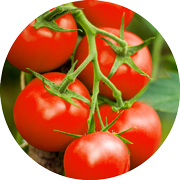
- Tomato with a 90 t/ha yield has a higher phosphorus demand and can remove 72 kg P2O5/ha.
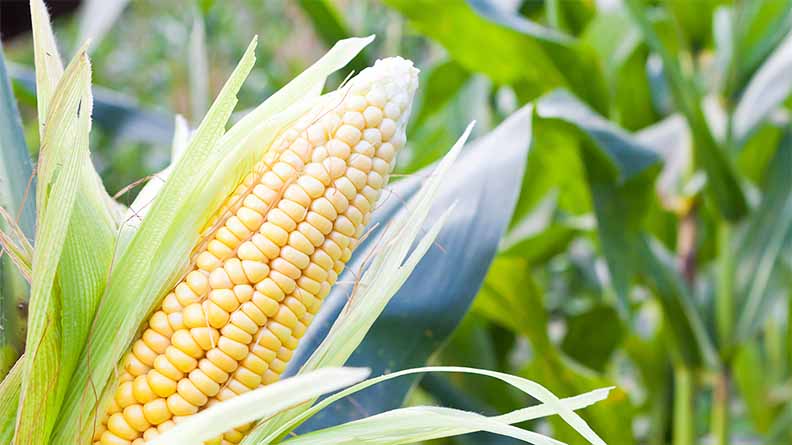
A maize crop yielding 6.3 t/h will remove about 48 kg P2O5/ha.
If not replenished, any phosphorus removed with the harvested crop is lost to future crops. Over time, continuous cropping without phosphorus replacement, or with insufficient phosphorus supply, will lead to soil nutrient depletion and declining soil fertility. This can have a significant impact, reducing the yields of future crops.
Using phosphate-based fertilizers supplements the nutrients in the soil to ensure crops receive the nutrients they need to thrive and deliver their full yield potential.
Smarter Timing and Placement for Better Uptake
Phosphorus is highly reactive. In soil, it binds easily with calcium, iron, or aluminum, forming compounds that are not available to plants. That’s why making the right decisions on how, where, and when phosphorus is applied makes a big difference.
Start Early with a Starter Fertilizer
Annual crops require additional phosphorus during early root and shoot development. Applying a phosphorus-containing starter fertilizer close to the seed boosts early vigor, root expansion, and stress tolerance.
Choose the Right Placement Strategy
Having decided what to apply and when to apply it, we need to consider the impact of different application methods. The efficacy of phosphorus fertilizers is significantly impacted by the application method. For the best results, it is essential to consider the placement strategy that is right for the crop, growth stage, and soil conditions.
Broadcast application:
- Applying phosphorus fertilizer to the soil surface before seed drilling and then incorporating it throughout the plow layer is a cost-effective solution that may result in improved rooting depth and effective uptake over time.
Banding:
- Placing phosphorus in a concentrated narrow band alongside crops ensures the fertilizer is close to the root zone. Banding is far more effective than broadcast application. It creates a concentrated nutrient zone, or ‘hotspot’, that developing roots can readily access. This method is especially useful in low-P or cold soils.
Deep banding:
- This is similar to banding, but the fertilizer is placed deeper in the soil. Deep banding is well-suited to no-till systems or dry conditions, where surface-applied P may not reach active roots.
Seed placement:
- In certain cases, phosphorus may be placed in furrow alongside the seed, although this must be done carefully to avoid seedling damage.
Fertigation:
- Delivering phosphorus through irrigation water provides an efficient way to supply the nutrient directly into the active root zone. Fertigation allows precise timing and uniform distribution, making it particularly effective in sandy soils, high-value crops, and intensive production systems. By applying smaller doses more frequently, fertigation can improve phosphorus use efficiency while reducing the risk of nutrient losses.
Adjust for Soil pH
The soil pH affects the degree of P fixation in the soil, locking the phosphorus in compounds that are not available to plants. Phosphorus availability is greatest when the pH is close to neutral, between 6.0 and 7.0. In acidic or alkaline soils, the availability of phosphorus drops due to phosphorus fixation.
Products like ICL’s Novaphos are ideal for acidic soils. Novaphos is a partially acidulated phosphate that is specifically designed for acidic conditions, and is the most effective way to give your growing crops the nutrients they need. ICL Novaphos provides a longer release, reduced leaching, and less P fixation for improved phosphorus use efficiency.
For fertigation, ICL has patented acidic fertilizers for use with high pH waters and/or soils, including our Nova PeKacid and NovAcid line of premium, water-soluble NPK fertilizers.
Tailoring the Fertilizer to the Crop and Soil
ICL’s extensive phosphorus fertilizer portfolio is a flexible toolkit of products, so growers have the flexibility to match the product to their crop’s demands and their soil’s characteristics.
ICL Phosphorus Products at a Glance
| Soil Application | Key Benefits | Typical Use |
|---|---|---|
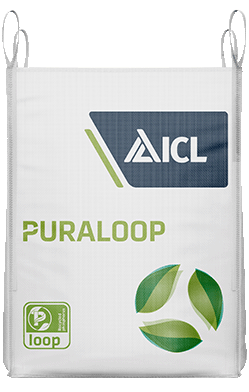
| Puraloop | High-quality, granular fertilizer that contains recycled P and delivers double-action phosphorus for improved efficiency. | Suitable for a wide range of crops and soil types, either directly applied to the soil or blended with other fertilizers. |
| GSSP | Good source of P, S, and Ca. Ideal for legumes and sulfur-deficient soils. | Pastures and legumes. |
| GTSP | High concentration of water-soluble P, making phosphorus rapidly available for plant intake. | Basal application for cereals, vegetables. |
| Novaphos | Partially acidulated phosphate for acidic soils, with slow release to reduce phosphorus leaching and P fixation. Residual benefit. | Perennials, maintenance applications. |
| ICL PKpluS – High P | Five-in-one granular fertilizers featuring Polysulphate® technology to provide nutrition throughout the crop cycle. | Great for crop establishment, and if soil phosphorus levels are low. |
| Granular PK and NPK blends | Custom P-K or N-P-K ratios with options for S and Mg. | Site-specific blends and soil needs. |
| Fertigation Product | Key Benefits | Typical Use |
|---|---|---|
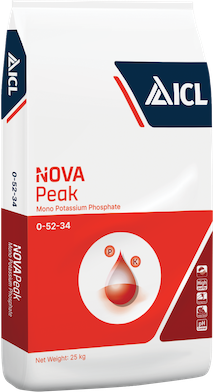
| Nova PeaK | Nova PeaK MKP is an extremely pure, premium monopotassium phosphate fertilizer that is extremely low in chloride. | Recommended for any crop and fertigation system. |
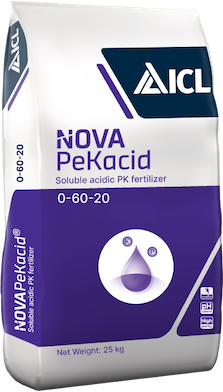
| Nova PeKacid | Highly acidic, fully soluble P and K fertilizer formulated for fertigation applications, with anticlogging action to provide blockage-free fertigation. | Ideal for open-field or soilless crop fertigation systems with high pH in soild and/or water. |
| NovAcid | Premium water soluble NPK fertilizers containing PeKacid to deliver essential nutrients while maintaining irrigation systems. | Ideal for fertigation application, reduces high pH in soil and/or water. |
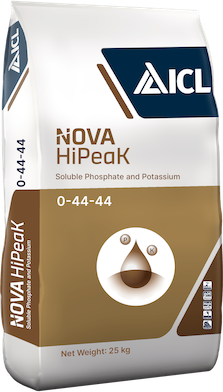
| Nova HiPeaK | Nova HiPeaK 0-44-44 fertilizer is our most highly concentrated P and K fertilizer. | Recommended for any crop type. |
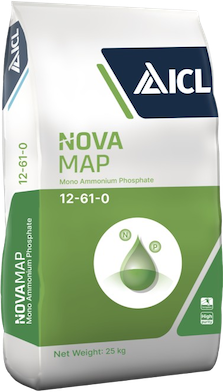
| Nova MAP | High P and N fertilizer. Excellent as a starter, and also handy at the flowering stage or to prevent fruits from being aborted. | Row crops, early-stage feeding. |
Integrating with Precision Agriculture
Modern precision tools, such as GPS-guided soil mapping, allow farmers to identify in-field phosphorus variability. Using this data, growers can accurately apply ICL fertilizers at variable rates, placing more product where soil reserves are low and less where they’re sufficient.
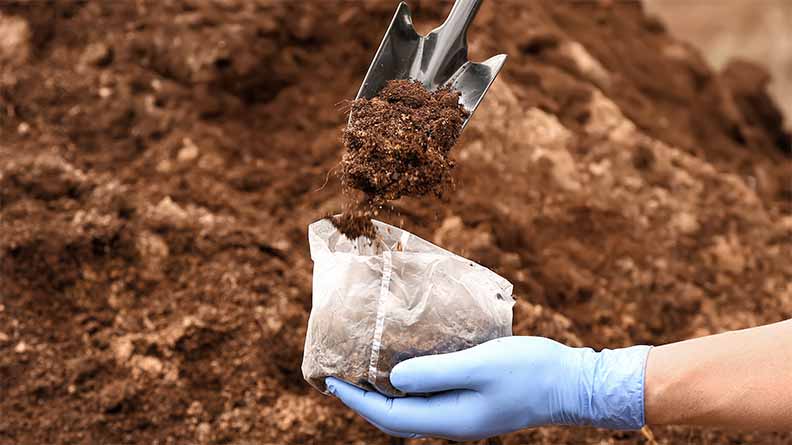
Regular soil testing reveals valuable information
Managing Phosphorus Responsibly
Phosphorus runoff can lead to water pollution and eutrophication. Responsible use includes:
- Testing soils regularly
- Applying the right rate based on crop removal
- Choosing fertilizers with high plant availability and low environmental impact
ICL supports sustainable farming by offering fertilizers with a lower carbon footprint, promoting recycling from industrial and organic sources, and providing technical support for optimal fertilizer use.
Smarter Phosphorus Use for Higher Yields
Phosphorus is a critical component of every successful crop, but getting the most from your investment requires smart choices about product selection, application timing, and placement strategy.
By using ICL’s high-efficiency phosphorus fertilizers and aligning your practices with the needs of your soil and crop, you can maximize yields, improve profitability, and protect the environment.