Whatsapp
  X
X  Mail
Mail  Copy link
 Understanding Plant Quality Trait Problems: Causes and Our Solution
In modern crop production, achieving optimal plant quality traits, such as robust root systems, large fruit size, and vigorous vegetative growth, is essential for maximizing yield and market value.

On this page:
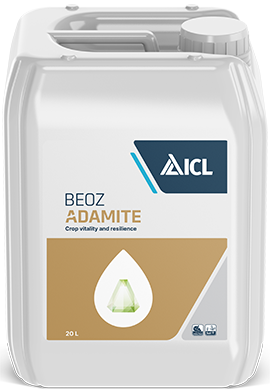
Small roots, stunted growth, and poor fruit size often result from nutrient deficiencies, environmental stress, and hormonal imbalance. This article explains how these factors disrupt plant development and how ICL’s BecoZ® Adamite biostimulant helps restore balance. By enhancing nutrient uptake, stress resistance, and hormonal regulation, BecoZ® Adamite supports stronger root systems, healthier growth, and improved crop performance – unlocking plants’ full genetic potential.
What Causes Small Roots, Small Fruits, and Stunted Growth?
Growers frequently encounter challenges like small root development, reduced fruit size, and insufficient plant growth. These issues are often interconnected and stem from physiological imbalances, environmental stressors, and suboptimal agronomic practices.
At the cellular level, plant development is regulated by a complex network of phytohormones, nutrient availability, and environmental signals. Disruption in any of these areas can compromise the plant’s ability to allocate resources efficiently.
Root Development and Nutrient Uptake
Poor root development is commonly linked to compacted soils, inadequate water management, and nutrient deficiencies. Particularly phosphorus and calcium are vital for root architecture and cell wall integrity. Research shows that phosphate deficiency triggers adaptive changes in root morphology, including increased lateral root formation and altered gravitropic responses. Plants tend to explore the shallower part of the soil, where phosphate tends to be more abundant.(1) A weak root system limits water and nutrient uptake, creating a feedback loop that suppresses shoot and fruit development.
Fruit Size and Hormonal Regulation
Fruit size is governed by both genetic and physiological factors. Cell division and expansion during fruit development are regulated by several genes whose expression is influenced by phytohormones, which are essential for fruit morphology, size and ripening. Environmental stress can impair metabolic pathways of hormone production as well as reduce photosynthetic activity resulting in lower carbohydrate allocation, leading to smaller, underdeveloped fruits.
Stunted Growth and Hormonal Imbalance
Stunted growth often reflects broader physiological stress. Deficiencies in nitrogen, potassium, and micronutrients reduce chlorophyll synthesis and metabolic activity. Abiotic stressors disrupt hormonal signaling, particularly involving gibberellins, which are crucial for stem elongation and leaf expansion.
How to Repair and Prevent Quality Trait Problems
Understanding the physiological mechanisms behind these quality trait problems allows for targeted interventions that lead to healthier plants and more consistent yields. Addressing these issues requires a multifaceted agronomic strategy which must include:
- Precision nutrition in the form of fertilization tailored to the crop’s developmental stage and environmental conditions that ensures optimal nutrient availability.
- Soil and water management that improves soil structure and optimizes irrigation practices to enhance healthy root development and sufficient nutrient uptake.
- Use of modern biostimulants that can maximize plant’s performance in terms of nutrient use efficiency and stress resilience.
BEOZ® Adamite: A Smart Solution by ICL
From ICL’s biostimulant range, BEOZ® Adamite is a product using the benefits of seaweed extracts from Ascophyllum nodosum. This brown seaweed algae are rich in bioactive compounds. The oligosaccharides from their cell walls act as signaling molecules that trigger defense response and supports plant optimal growth under abiotic stress conditions. The seaweed extract enhances plant physiological functions associated with growth and stress adaptation.
BEOZ® Adamite combines these substances with a mixture of free amino acids which the plant can immediately use to form necessary proteins without additional energy costs. This process speeds up metabolic pathways and effectively help plants combat abiotic stress. The effect of the formulation results in better growth and overall increased crop performance.
Conclusion
Whether you’re dealing with small roots, small fruits, or stunted growth, the key lies in understanding the underlying biological and environmental mechanisms. By integrating nutritional management and stress mitigation strategies, growers can significantly improve plant performance and crop quality.
References:
- Plant Physiology, Volume 166, Issue 4, December 2014, Pages 1713–1723, https://doi.org/10.1104/pp.114.244541).