Whatsapp
  Mail
Mail  Copy link
 Effect of Number of Functional Leaves on Banana
Discover how functional leaves impact banana growth, yield, and nutrient uptake, with fertilization tips for each growth stage.

On this page:
Banana is the one of the world’s leading staple crops, after Rice, Wheat & Maize. Banana fruit is rich source of carbohydrate, several minerals, and vitamins. Potassium content in Bananas is among the highest compared with other fruits. At the green stage, bananas have very high starch content and a low amount of sugars, which changes dramatically to high sugars and low starch at full ripe stage. Banana is a commercial fruit crop with its high market value largely depends on its fruit length, width & colour, but the growth and development of banana bunch rely on number of functional leaves on plant, during early establishment stage to bunch emergence and maturity stage especially during the bunch development stage is crucial to achieve high-quality yield.
The banana growth cycle consists of three phases viz., Emergence and establishment of shoot, Grand growth and bunch emergence, bunch development and maturity. Each stage requires specific nutrients input to insure better crop establishment uptake of nutrients and overall plant health. This article highlights the role of essential nutrients and appropriate fertilization strategies to improve yield in respect of quality parameters, enhancing farmers income and market competitiveness.
Growth Phases of Banana
Emergence & Establishment of Shoot –
The first phase begins with the production of leaves by planted tissue or Sucker, during early stage, plant develop essentially two components.
- An underground corm, producing suckers & roots.
- A pseudo stem, consisting of encircling leaf sheaths & carrying the leaves.
Grand Growth and Bunch Emergence –
Plant produces bigger leaves, the grand growth phase, meristem transitions into floral shoot & Banana plants need full sun exposure for optimal growth. During this phase numbers of suckers per plant observed more.
Bunch Development & Maturity –
The inflorescence reveals clusters of flowers covered by bracts. The flower initially functions as female & later transition to male, facilitating cross-pollination.
Impact of Leaf on Banana Cultivation
The impact of leaf on banana cultivation is significant, as leaves play a crucial role in the growth and development of banana plants. Here are some ways leaves affect banana cultivation:
Photosynthesis and Growth
- Photosynthesis: Banana leaves are responsible for photosynthesis, which produces the energy and nutrients needed for plant growth.
- Light interception: Large, healthy leaves help intercept sunlight, promoting photosynthesis and overall plant growth.
Water and Nutrient Uptake
- Transpiration: Leaves regulate water loss through transpiration, which helps maintain the plant’s water balance.
- Nutrient uptake: Leaves absorb essential nutrients from the air and soil, supporting plant growth and development.
Pest and Disease Management
- Pest habitat: Leaves can provide shelter and food for pests, such as aphids, whiteflies, and spider mites.
- Disease susceptibility: Leaves can be susceptible to diseases like leaf spot, leaf blight, and Panama disease, which can impact plant health.
Pruning and Management
- Pruning: Regular pruning of leaves can help control plant height, promote fruiting, and reduce disease susceptibility.
- Leaf removal: Removing damaged or diseased leaves can help prevent the spread of disease and promote healthy growth.
Impact on Fruit Quality
- Shading: Leaves provide shade for the fruit, protecting it from excessive sunlight and heat stress.
- Fruit growth: Healthy leaves support fruit growth and development, influencing fruit quality and yield.
Overall, maintaining healthy leaves is essential for optimal banana cultivation, as they play a critical role in plant growth, nutrient uptake, and pest management.
The Leaf-to-Bunch Link in Banana Cultivation
Nitrogen (N): Induces the vegetative growth of the pseudo stem and leaves giving them desirable healthy green colour. It is observed that the greater the number of large, healthy leaves produced during the 90 days to 210 DAT, the larger will be the size of the bunch.
Phosphorus (P): Helps to produce healthy strong root system. It also influences flower setting & general vegetative growth; it plays a key role in reactions involving ATP. This element is necessary for many life processes such as photosynthesis, metabolism of carbohydrate and transfer of energy within the plant.
Potassium (K): Has a prominent role in the improvement of leaf area & dry matter production within the plant which ultimately resulted in leaf expansion. Regulates stomatal opening & closing, increasing plant resistance to biotic & abiotic stresses.
Calcium (Ca): Calcium is a constituent of the middle lamella of cell walls as a Calcium pectate. Calcium deficiency is a widespread problem in Banana, Characterized narrow land of marginal chlorosis of leaves turning into necrotic fallow. Youngest leaves with thickened secondary veins. Splitting and curling of leaf edge. In general dwarfing, reduced leaf length and reduces leaf emergence.
Magnesium (Mg): Essential for photosynthesis, leaf growth, and fruit production. Magnesium deficiency can cause yellowing or interveinal chlorosis.
Boron (B): Involved in cell wall development, leaf growth, and fruit production. Boron deficiency can cause leaf deformities or brittle leaves.
Copper (Cu): Plays a role in plant defence, leaf growth, and fruit production. Copper deficiency can lead to stunted growth or leaf discoloration.
Manganese (Mn): Essential for photosynthesis, leaf growth, and plant development. Manganese deficiency can cause interveinal chlorosis or stunted growth.
Iron (Fe): Important for photosynthesis and leaf growth. Iron deficiency can cause interveinal chlorosis or yellowing.
Zinc (Zn): Involved in plant growth regulation, leaf development, and fruit production. Zinc deficiency can lead to stunted growth or leaf deformities.
A balanced supply of these nutrients is crucial for healthy banana plant leaf emergence and overall plant development.
Nutrient Management in Banana Production
Emergence & Establishment of Shoot Stage
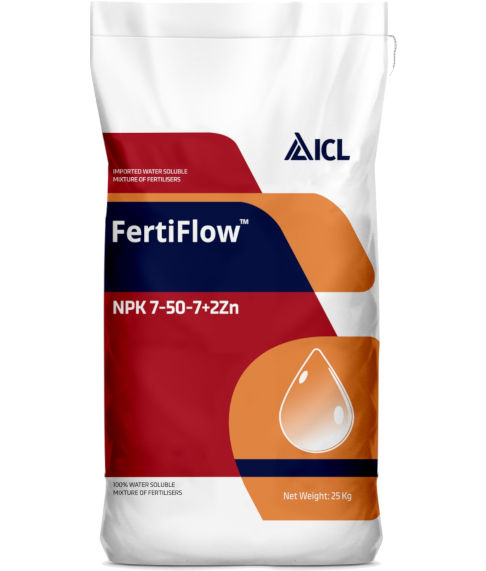
- FertiFlow 07-50-07+2Zn: Supplies early-stage NPK + Zinc via fertigation/drenching; promotes strong root development.
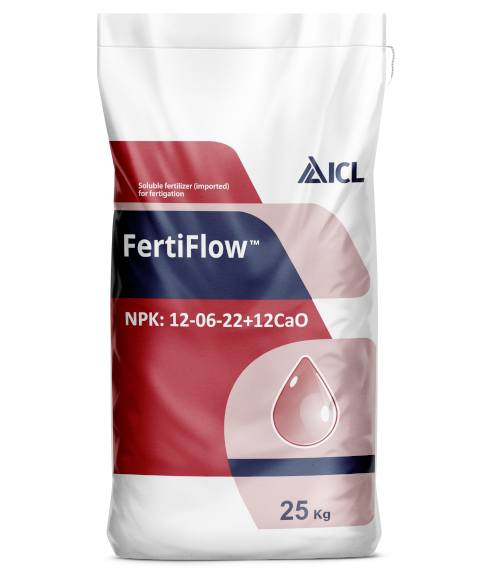
- FertiFlow 12-6-22+12CaO: Balanced N, K, and Ca; strengthens roots, enhances cell division, and supports structural growth.
- Liquid Zinc Suspension: Applied during early stages & bunch emergence; boosts metabolism and cell division.
This combined approach not only meets the NPK requirements but also provides crucial calcium and micronutrients, essential for robust vegetative growth.
Grand Growth Phase to Bunch Emergence Stage
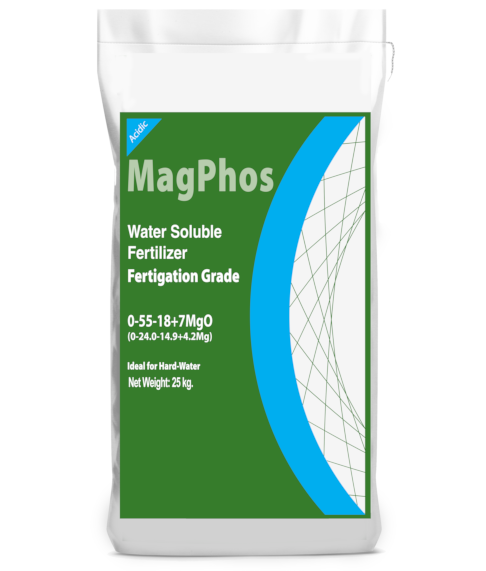
- Magphos 0-55-18+7MgO: Improves leaf area, enhances photosynthesis, and supports new leaf growth.
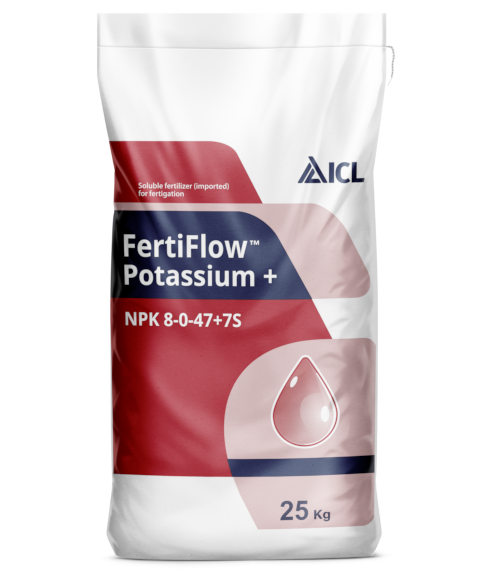
- PeKacid 0-58-18 + FertiFlow Potassium+ 8-0-47+7S:
- Ensures P & K supply for uniform bunch emergence, better fruit size, shape, and color.
- K regulates water balance and stress tolerance.
- S enhances fruit/bunch weight and disease resistance.
- Liquid Boron 10% : Promotes leaf and bunch emergence, improves fruit shape.
- Liquid Calcium 11% : Prevents calcium deficiency (splitting/cracking), supports proper ripening and firmness.
Fruit Development Stage
- PeKacid 0-58-18:
- Encourages strong fruit setting and supports energy transfer for better fruit growth.
- Improves nutrient availability in alkaline soils and prevents clogging in drip systems.
- Enhances uptake of nutrients like calcium and magnesium needed for fruit firmness and quality.
- Helps in better color, shine, and shape development in banana fruits.
- Fertiflow Potassium+ 8-0-47+7S:
- Promotes uniform fruit filling, size, and enhances sugar accumulation, improving taste and sweetness.
- Enhances protein synthesis, boosts fruit firmness, color development, and improves disease resistance.
- Regulates stomatal movement, enhancing water balance during dry spells.
- Increases tolerance to biotic (disease) and abiotic (drought, heat) stresses.
- Promotes efficient nutrient uptake, especially important during fruit bulking stage.
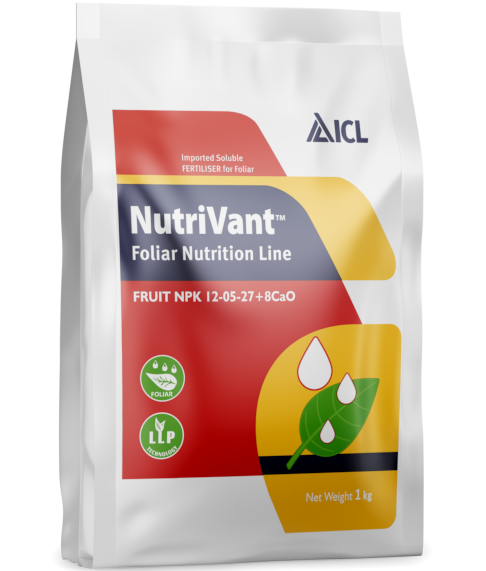
- Nutrivant Fruit (12-5-27+8CaO+Micros): Ensures balanced nutrition for uniform fruit size and length.
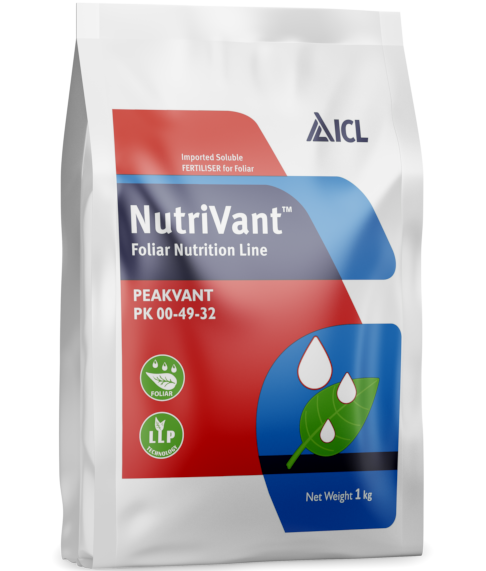
- Nutrivant Peakvant (0-49-32): Enhances fruit quality—flavor, texture, appearance.
- Application: Two foliar sprays each of Nutrivant Fruit and Peakvant at 7–8 day intervals.
Conclusion
Maintaining a higher number of healthy, functional leaves in banana plants from early establishment to bunch development is vital for optimal photosynthesis, nutrient uptake, and bunch quality. Proper nutrient management—especially of Nitrogen, Potassium, Calcium, and key micronutrients—supports robust leaf growth, directly influencing fruit size, weight, and overall yield. A balanced, timely fertilization strategy ensures healthy leaves, better bunch emergence, and high marketable value, ultimately improving farmer profitability.