


 व्हॉट्सॲप
 ईमेल
ईमेल
 लिंक कॉपी करा
 Higher Soybean Seed Weight with Polysulphate in Maharashtra
Soybean Seed Weight
Village: Ghodka, Rajura, Taluka/District: Beed, Maharashtra, India 2020
Soybean Seed Weight
मुख्य निष्कर्ष
In comparison with the existing Farmer practices, the ICL practice, via the usage of Polysulphate fertilizer, demonstrated a considerable increase in the seed weight of the Soybean crop and their overall yield per hectare. This translates to additional returns per hectare and also the marginal cost benefit ratio for Soybean crops in Indian conditions.
उद्दिष्ट
To evaluate the effect of Polysulphate on growth and yield parameters of Soybean
चाचणीची माहिती
चाचणीचे स्टेशन
Village: Ghodka, Rajura, Taluka/District: Beed, Maharashtra, India
पीक
Soybean
मूल्यांकन
No. of Pods, 100 Seed Weight, Yield
उपचार
- Farmer Practice: 23N: 58P:0K: 23S
(18:46:0 – 125Kg + Elemental Sulphur 25Kg) /ha - ICL Practice: 23N: 58P: 46K: 46S: 41CaO + 14Mg0
(18:46:0 – 125Kg + Polysulphate 250Kg) /ha
उपचार
- Farmer Practice: 23N: 58P:0K: 23S
(18:46:0 – 125Kg + Elemental Sulphur 25Kg) /ha - ICL Practice: 23N: 58P: 46K: 46S: 41CaO + 14Mg0
(18:46:0 – 125Kg + Polysulphate 250Kg) /ha
निकाल
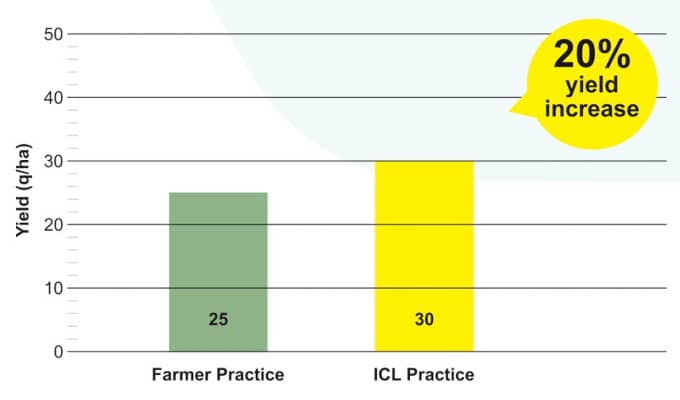
Increase of 20% observed in yield of Soybeans during trials at Beed, Maharashtra
The average number of Pods per plant were 78 in ICL Practice and 73 in Farmer Practice. The 100 seed weight was 13gm in ICL Practice and 11gm in Farmer Practice i.e., 18% increase over Farmer Practice. The yield per hectare was 30 q/ha in ICL Practice and it was 25 q/ha in Farmer Practice i.e., 20% increase over Farmer Practice. The additional returns per hectare was Rs.20,800/- and the marginal cost benefit ratio was 2.77.
Related Trials
